
CASE STUDY
MNP Tower, Vancouver — Recovery and Redeployment
Seven floors installed in 2015, recovered in full in 2025, and redeployed across MNP projects nationwide.
PROJECT SNAPSHOT
CLIENT
MNP Vancouver
LOCATION
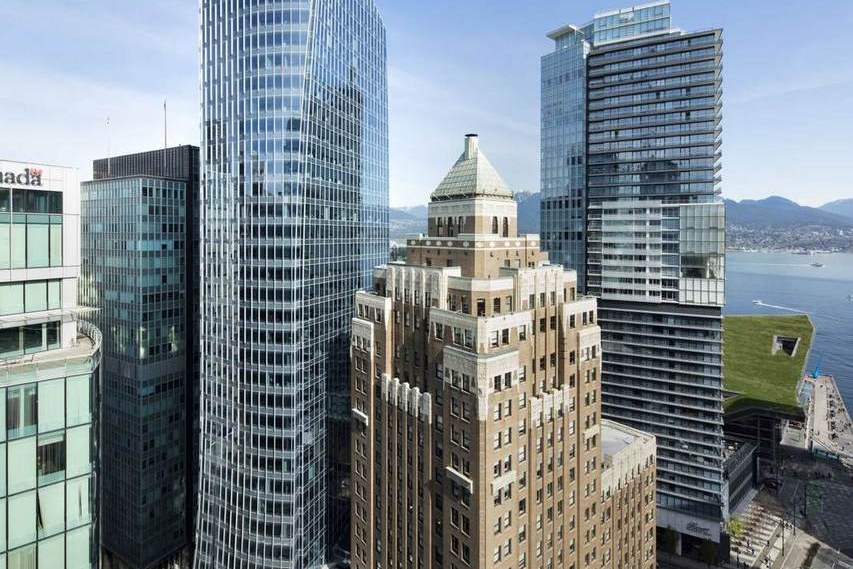
MNP Tower, 1021 West Hastings Street, Vancouver
PROJECT TYPE
Office Fit-Out, Recovery and Redeployment
SCALE
7 floors
SCOPE
Prefabricated zonal cabling, copper and fibre backbone, sound masking, AV across meeting rooms, boardroom, training room and bistro
In Service
2015 to 2025 — ten years
Recovery
100% recovered, recertified and redeployed nationally
EXECUTIVE SUMMARY
In 2015, Tekena delivered seven floors of prefabricated zonal cabling, sound masking and audiovisual systems for MNP LLP at MNP Tower in Vancouver. Ten years later, when MNP gave up the space, they did something almost no organisation can: they took the infrastructure with them. Tekena recovered 100% of the installed product, returned it to the facility for testing and recertification, and redeployed it across MNP projects nationwide. Under 4% was lost to damage in the process.
THE CHALLENGE
The interesting question about this project did not arise in 2015. It arose a decade later.
When an organisation gives up office space, conventional structured cabling goes one of three ways: it is abandoned in the ceiling for the next tenant, stripped out as construction waste, or written off and forgotten. None of those recovers any of the original investment, because in a traditional installation most of the cost was on-site labour, not material — and labour cannot be recovered.
MNP owned their infrastructure outright. When they moved on from MNP Tower, the question was whether a system that had been in daily service for ten years could be taken out intact, proven still fit for purpose, and put back to work somewhere else.
THE SOLUTION
The 2015 installation covered seven floors: prefabricated zonal cabling throughout, with prefabricated copper and fibre backbone looms linking the floors, plus sound masking and audiovisual systems installed, programmed and commissioned across meeting rooms, the boardroom, the training room and the bistro.
Because the system was factory-terminated rather than built in place, recovery in 2025 was a controlled process rather than a demolition:
THE RESULTS
10
YEARS IN SERVICE
100%
RECOVERED FROM SITE
Zero
TO LANDFILL
Every component installed in 2015 came off site. What follows is the full accounting, including what did not survive.
Across 682 recovered components, 25 were lost to damage. Under 4% of a system that had been in continuous service for a decade, then removed, transported, tested and recertified.
Those 25 components did not go to landfill either. The copper and fibre went for recycling, so nothing taken out of the seven floors was sent to waste — 96% back into service, the remainder back into the material stream.
The commercial arrangement matters as much as the numbers. MNP owned the product. They paid Tekena to recover it. And they now reuse it in their own projects. At no point was the infrastructure treated as consumable.
LOOKING FORWARD
The recovered product is not in storage. It has been sorted, recertified and distributed to MNP projects across the country, where it is carrying live traffic in buildings that never paid for it as new material.
That is the practical meaning of infrastructure as an asset. A conventional cabling installation is a cost that ends with the lease. This one moved buildings, kept its value, and reduced the material cost of every project it has since been deployed into. The same applies to the sound masking, recovered alongside the cabling and redistributed to the same projects.
For an organisation operating offices from Vancouver Island to Nova Scotia, that changes the arithmetic of every fit-out and every exit.
Tekena delivers prefabricated, single-source IT integration — from data comms to AV to acoustic systems to desktop deployment — across Canada. Get in touch to discuss your next project.
Let's Connect